Skill limits
Does memory win every rummy sitting, or only the ones already decided
One number first: 13. A 13-card sequence rewards tracking what is dead, not reciting the whole deck. The myth that a good memory wins every session collapses the moment a printed joker and an unseen hand sit across the table. Skill moves the drop. It does not cancel the other ten cards you cannot see.
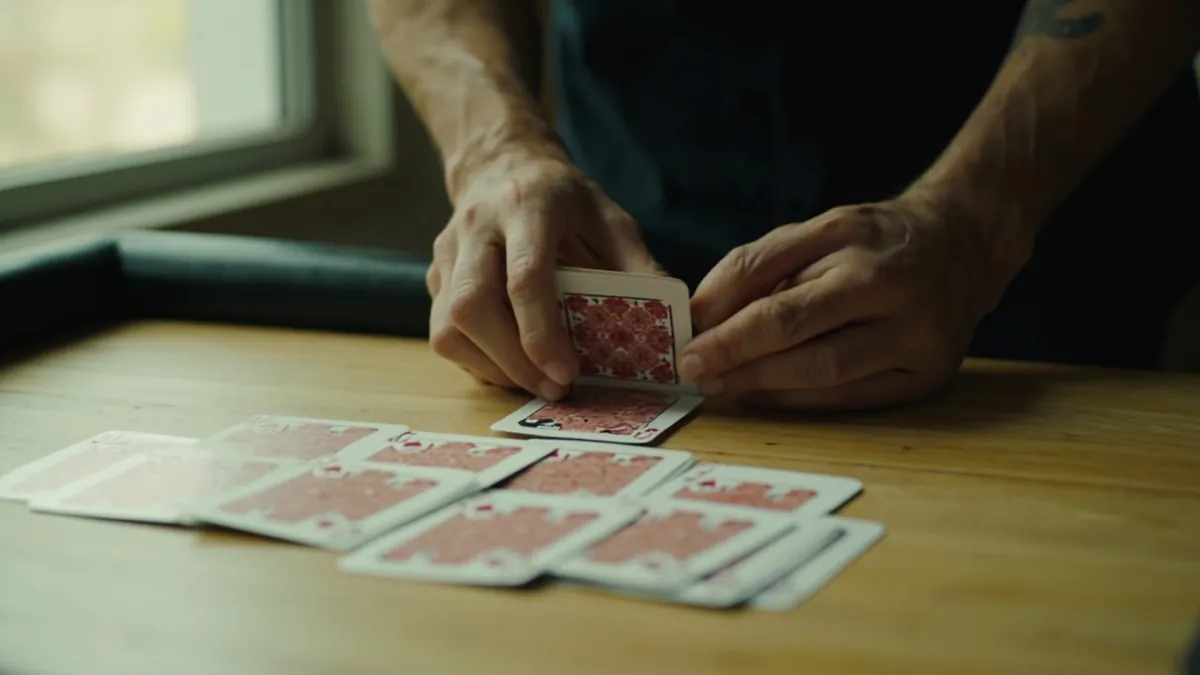
Myth, fact, implication
Myth: the better counter always leaves with the pot. Fact: a 13-card Indian hand still contains information you do not own, including the opponent's closed cards and the remaining deck order. Implication: treat memory as a tool for discard hygiene, not as a claim that the sitting is solved.
If memory were enough, first drops would not exist. They exist because some hands are already dead. Refusing that fact is not strategy. It is a donation.
Hold versus drop is the only high-stakes fork
Holding a middle rank because it might become a bridge is reasonable for one draw. Holding it for four draws while your leftover count sits above a typical first-drop value is how points sittings explode. Count the leftover, then ask whether the next card has a specific home. If the home is "maybe a set", discard.

Table selection is a strategy decision
A 201 pool with four strangers is a different risk from a three-deal sitting with a printed N. If the product lets you see format, stake unit and drop values before you sit, use that screen. If it only shows a glowing tile, you are selecting marketing.
Drop thresholds only work when the slip is visible
Illustrative arithmetic, not a Betcasino rule: if a first drop is 20 and your unmatched count is already 46 with no pure-sequence seed, holding is a bet that the next few cards will erase 26 points and invent a run. That bet is usually worse than the drop.
Write the threshold before the deal. Changing it after you see an ace is how limits die.

Two questions this desk will not close
First: does Betcasino expose discard history long enough to make memory useful? Unpublished. Without that, advanced tracking advice would be theatre.
Second: does the client punish an invalid show at a printed rate a reader can read before they sit? Unpublished. Until that number exists, any claim of a guaranteed edge is false.
Decision under uncertainty: if both answers stay blank, sit only a single points hand or do not sit. Strategy cannot repair a missing slip.
What skill cannot move
Skill cannot see the closed hand. Skill cannot reorder the remaining deck. Skill cannot turn a missing pure-sequence seed into a legal show by wishing for a wild. Those limits are why this note refuses guaranteed-edge language.
Skill can refuse a table whose slip is blank. Skill can drop when the leftover already exceeds a printed first-drop value. Skill can stop after N deals because N was written down. That is a smaller claim and it is the only claim this desk will defend.
Readers who want a larger claim usually want a bonus story or a winner story. Those stories are not here because they are not on file. If a later primary document appears, the dated notes will carry it. Strategy will not be rewritten around a rumour.
Discard hygiene beats folklore
Throw the card that helps the fewest live runs you can see. If two hearts are already dead on the pile, a third heart is safer to release than a singleton spade that could still complete an unseen run. That is observation, not folklore.
Folklore says never throw a middle rank. Observation says a 7 with no 5, 6, 8 or 9 after two draws is a leftover clock. Keep the rule that names a home. Drop the proverb.
If two opponents take from the same suit, stop feeding that suit. If nobody has touched a suit, your singleton there is information you may not want to give. None of this requires a counting app. It requires looking at the pile you already have.
Strategy questions
Is counting cards legal skill or a cheat?
Tracking open discards is ordinary play. Using a second device to log them may violate a house rule. The desk has not seen Betcasino's clause.
Do I always chase a high set?
No. A set that delays the pure sequence is a leak.
Should I bluff a discard?
In printed rummy the discard is information. Fancy false discards help only if you can afford the leftover.
Does pool reward different skill?
Yes. Survival and refusal to rebuy. Not one heroic show.
Can strategy beat the 2025 Act?
No. Law is not a table tactic.
Where do I put a loss limit?
On paper, before PLAY NOW. Then on the product control if one exists.
Next step
If the open questions bother you, weigh the client next
PLAY NOW remains available. The ledger is the next editorial stop.

18+. No guaranteed edge. Illustrative arithmetic only.
Why a good discard is often a boring discard
The card that helps the fewest live runs you can see is usually correct. Fancy false discards are for people whose leftover count is already safe. A first sitting is not that sitting.
Pool survival is a refusal skill
The useful move in a long pool is often declining the next rebuy, not finding a clever set. If the product makes rebuy a single tap, write the refusal on paper before you sit. Software will not refuse for you.
What memory is actually for
Memory tracks dead suits and dead ranks on the open pile. It does not see the closed hand. Advice that pretends otherwise is folklore. If discard history vanishes after five cards, even that small skill is gone.
Two thresholds worth writing
A leftover threshold for a first drop. A time threshold for standing up. Change either after you see a joker and you have replaced a rule with a mood.
When strategy should send you away from the table
If both the slip and the discard history are blank, the honest strategy is not to sit, or to sit one unstaked points hand. Strategy cannot repair missing furniture.
Middle ranks without a named home
A 7 with no 5, 6, 8 or 9 after two draws is a leftover clock. Proverbs about never throwing middles are for people whose count is already safe. Name the home or release the card.
What an unseen discard history does to memory advice
If the pile vanishes, stop pretending you are tracking. Play the simpler drop rule. Advanced hygiene needs furniture.
One more pass on what skill cannot repair
If the slip is blank and the discard history vanishes, advanced hygiene is theatre. Sit one unstaked points hand or do not sit. Memory tracks open dead cards. It does not see the closed hand. Pool survival is refusal to rebuy. Write that refusal before the product offers a one-tap continue. Strategy that needs a guaranteed edge is not strategy. It is a wish wearing a heading.
Further notes on this subject
A last practical cut for people who still want a system: write the leftover number that triggers a first drop, write the clock that ends the sitting, and write the format name. If you cannot write those three, you do not have a strategy. You have a hope that the next card will organise your life.
Hope is how invalid shows happen. A software highlight that says you can declare is not a count. Count. If the pure sequence is not visible as a group, cancel. If the leftover already exceeds a typical printed first drop, leave. Those two sentences will save more rupees than any proverb about never throwing a seven.
Pool players should add a fourth line: no rebuy. The product will offer a tap. The tap is not a friend. Deals players should add the printed N. Points players should add 'one hand only' if they came to learn. Format is strategy. It is not a flavour.
If Betcasino later shows discard history and a readable slip, this note can grow a tighter hygiene section. Until that furniture exists, growing it now would be fiction. The honest edge is refusal.